
The law doesn't end
at the edge of the screen.

Statements on social media can be unlawful if they violate criminal or civil law. And yet it is often difficult to get hate speech or fake news taken down. That is exactly where we come in — from individual unlawful posts through fake accounts and account suspensions to the regulation of platforms at large.

Lead counsel: Dr. Jessica Flint · deputy lead: Dr. Sebastian Volk.

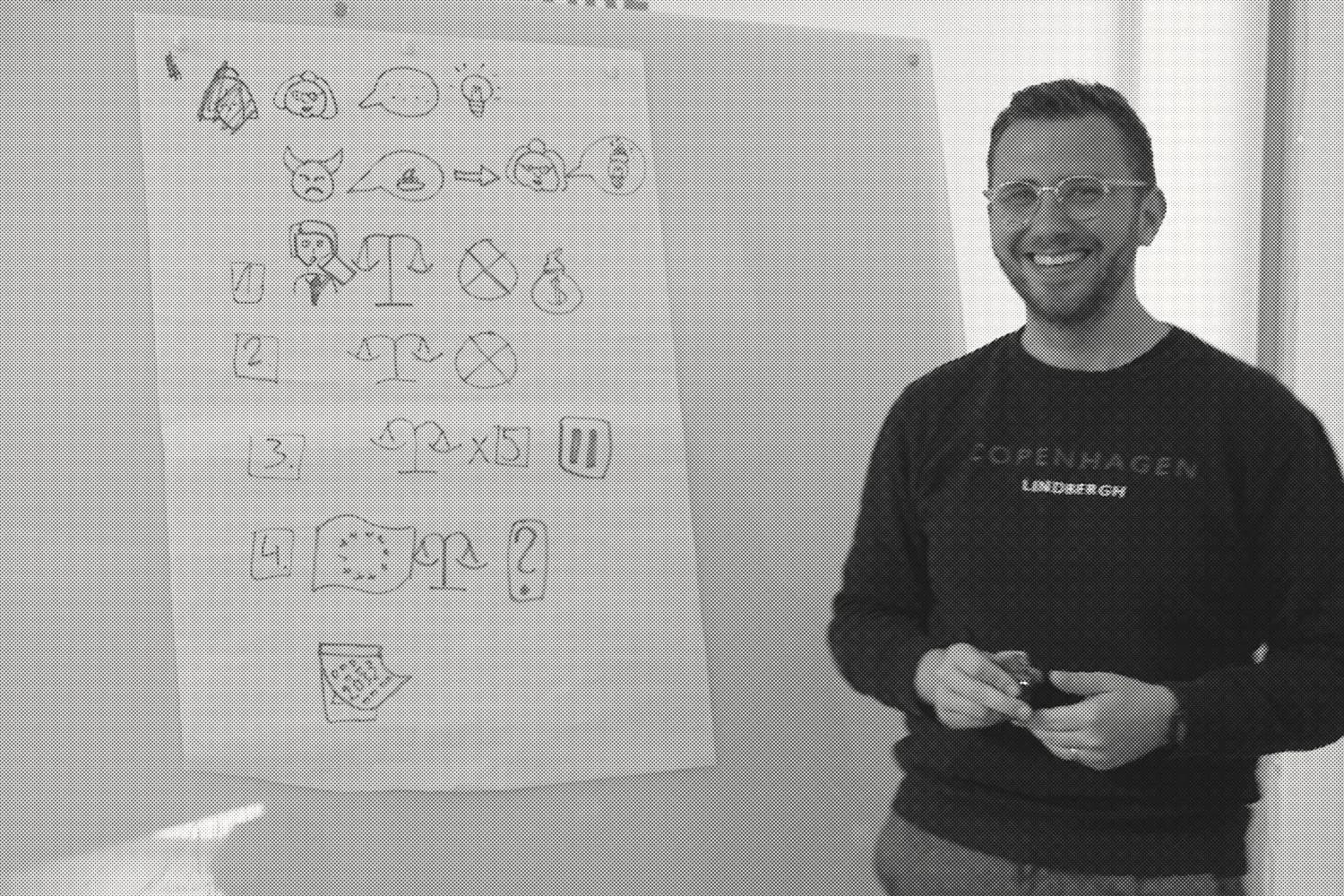
Workshop flipchart with sketched legal questions, a speaker beside it

What we do.

01

Unlawful posts

Hate speech, fabricated quotes, fake news, insults: When statements on social media violate criminal or civil law, we enforce legal protection against them — from reporting through cease-and-desist warnings (Abmahnungen) to an einstweilige Verfügung (preliminary injunction) against author and platform.


02

Fake accounts

Fake profiles are rarely harmless — they often involve identity misuse and reputational damage. We obtain the suspension and deletion of fake accounts and, where possible, take action against those responsible and the platform.

03

Suspended accounts & posts

Suspensions often happen suddenly, automatically, and without a comprehensible explanation. We enforce the restoration of suspended or deleted accounts and posts — and assess claims for damages, for example for lost reach and revenue.

04

Platform law & DSA

Behind the individual case stands the larger question of how far platforms must enforce applicable law. As a law firm long active in platform law, we work on the enforcement of the Digital Services Act and the liability of providers — and help shape the debate.

05

Reviews & review platforms

Inaccurate or unlawful reviews on Google, kununu, or Jameda can hit reputation and business hard. We enforce the removal of untrue factual assertions and impermissible abusive criticism (Schmähkritik) — against the author and against the platform, which under settled case law is obliged to review reported content.

06

Search results & right to be forgotten

Anyone linked on Google to outdated, untrue, or reputation-damaging results may have a claim to delisting (Art. 17 GDPR (DSGVO)). We assess the prospects of success in the tension between personality rights and freedom of information, and enforce removal against the search engine operator.

Our commitment

We fight to ensure that applicable law is enforced on social media too — against platforms that long considered themselves untouchable.

New — take action yourself

First steps on your own —
or with us at your side.

With the JUNLOCK Best Practices, people affected by account suspensions, fake profiles, hacking attacks, or other social media problems receive clear, understandable step-by-step guides for taking the first legal measures on their own.

If further help is needed, we stand ready — digital, solution-oriented, and frequently at transparent flat-fee terms*, through to full resolution of the matter.

Offered by
JUN Legal GmbH
Topics
Account suspensions · Fake profiles · Hacking attacks · Content theft
Response
Mon–Fri, usually within 24 hours
Contacts
Dr. Sebastian Volk · Niels Gehrig
Contact
platformrights@jun.legal

* Whether a flat fee is possible depends on the scope and complexity of the case. We always clarify this before you retain us — you keep full control of costs.

Cases & outcomes.

[ Selection ]
LG Köln
2026

Böhmermann v. X — deletion of a fake account

For Jan Böhmermann, JUN Legal obtained a preliminary injunction from the Landgericht Köln (Regional Court of Cologne) obliging X (formerly Twitter) to delete a fake account — a success against a practice that otherwise often leaves those affected on their own.

Fabricated quotes
Personality rights

Against the spread of fabricated quotes

Falsified statements spread virally and can affect anyone — from private individuals to public figures. We represent those affected against fabricated quotes and their further dissemination; a field our team, including Matthias Pilz, has helped shape over many years.

LG München I · LG Würzburg
Landmark

When entire accounts must be removed

Before the Landgericht München I (Regional Court of Munich I) and the Landgericht Würzburg (Regional Court of Würzburg), we obtained decisions that strengthen people who are insulted and defamed on social media — up to and including the platform's obligation to remove not just individual posts but entire accounts. A line of case law we put to consistent use in our client work.

Platform liability
Developments

The end of the liability privilege?

With fake accounts and deepfakes, responsibility is increasingly shifting toward the platforms. We follow and comment on this development — and translate it into concrete strategies for enforcing your rights.

Frequent questions.

[ FAQ ]
Question 01
Opinion or fact

Do I have to put up with negative criticism and bad reviews?

Permissible expressions of opinion, yes — untrue factual assertions and impermissible abusive criticism, no. This distinction decides the prospects of success, and we make it before taking the first step.

Question 02
Evidence

What should I do before I fight back?

Preserve evidence: screenshots with URL and date, ideally before you react. Do not delete anything and do not respond hastily — both can make later enforcement more difficult. With the JUNLOCK Best Practices, you can manage the first steps on your own.

Question 03
Process & costs

How does the process work — and what does it cost?

Typically: assessment, notice-and-complaint procedures, cease-and-desist warning, and if necessary a preliminary injunction. We resolve many cases at transparent flat-fee terms; whether that is possible is something we always discuss before you retain us.

Question 04
Timing

How quickly can unlawful content be removed?

Through the notice-and-complaint procedure, often within days; if it is urgent, a preliminary injunction enables a court decision on short notice. The pace depends on the platform, the strength of the evidence, and the urgency.

Question 05
Abroad

What if the author or the platform is based abroad?

Claims can still be enforced: major platforms can be addressed under EU law and the DSA, and German courts frequently have jurisdiction over infringements with a domestic connection. We determine the right addressee and venue.

Question 06
Anonymity

Do I need to know who is behind a post or a review?

No. Even with anonymous content, you can hold the platform to account: it has a duty to review and must remove unlawful content once it has been reported.

Question 07
DSA

What does the Digital Services Act do for me?

The DSA obliges platforms to provide notice-and-action procedures, reasoned moderation decisions, and complaint channels. We use these rights deliberately to accelerate enforcement in the individual case.