
When the models
learn faster
than the law.

We work intensively on the latest legal questions surrounding artificial intelligence and large language models: Who owns AI-generated content? Who is liable for errors? How can data protection and transparency be ensured? Our expertise — which we also expanded through a state-funded research project — helps evaluate these challenges and find practical solutions.

Lead counsel: Dr. Sophie Garling · deputy lead: Johannes Partheymüller.

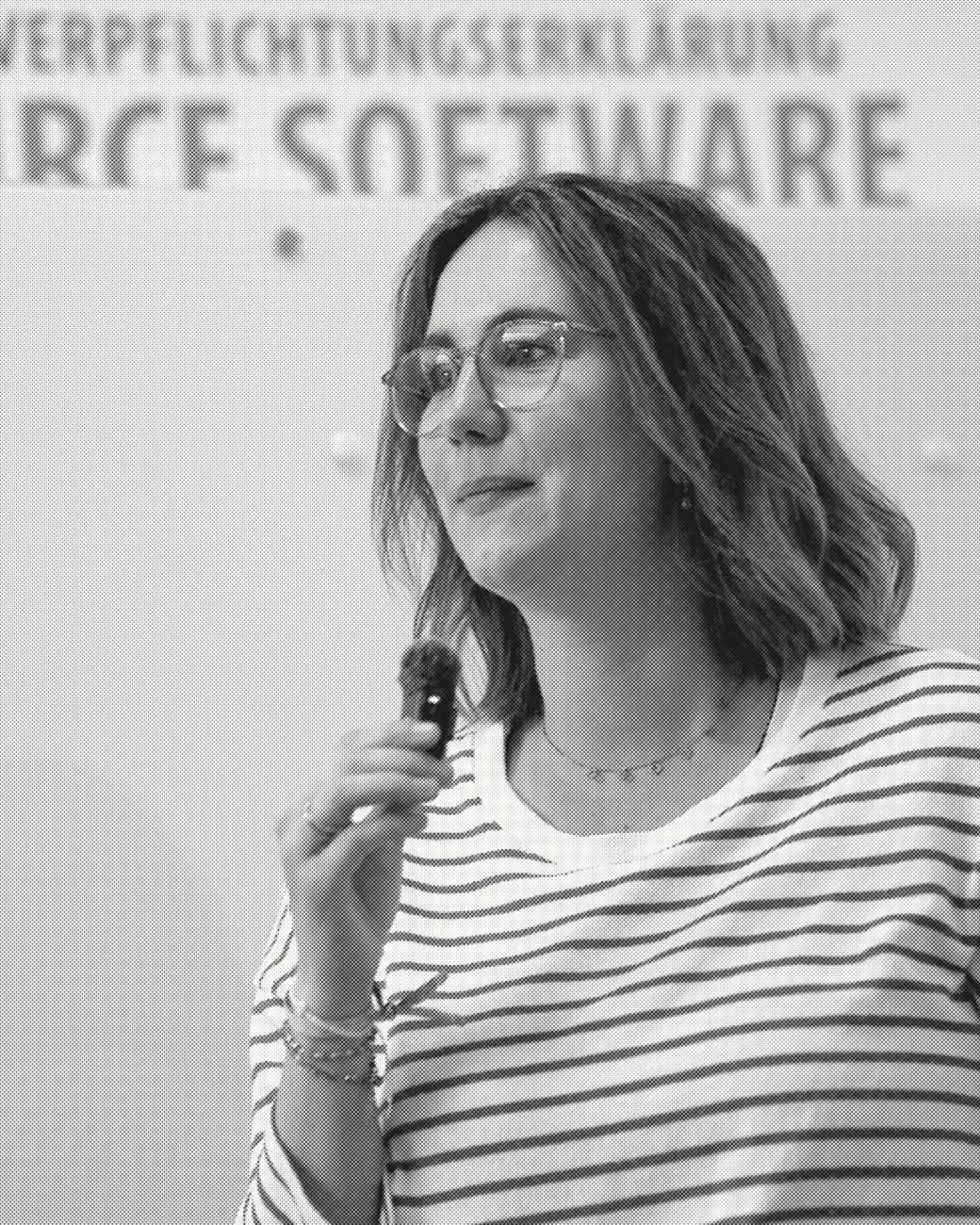
Question from the audience at a JUN event

What we do.

01

Contract clauses

Liability provisions, information obligations, allocation of obligations in standard terms and individually negotiated agreements. We write clauses that address AI-specific risks cleanly — so they don't have to be fought out in court first.


02

AI compliance

From the EU AI Act (KI-VO) and the Data Act through to copyright and data protection. We classify AI systems by risk level, assess conformity, and track the regulation's staggered application: prohibited practices since February 2025, general-purpose AI (GPAI) since August 2025, high-risk from August 2026.

03

Knowledge diffusion

Keynotes, talks, webinars, employee training, and publications. These include our five-part webinar series “Recht trifft KI” (“Law Meets AI”) and our briefing “KI und Digitalisierung” (“AI and Digitalization”), both with Deutscher AnwaltVerlag, as well as regular talks and workshops on AI-generated code, copyright, and compliance.

04

Tool development

Legal support for building your own AI applications: software development contracts, licensing of the output, data processing agreements, NDAs, and the transparency obligations under Art. 50 KI-VO. We know the pitfalls, because we have walked this path ourselves.

Completed research project

In a state-funded research project, we researched legal questions that cannot be answered from textbooks alone.

Available now

The book on LLMs
in legal practice.

The practitioner's handbook “Generative KI in der Rechtsberatung — Erkenntnisse zum Einsatz von Large Language Models” (Generative AI in Legal Advice — Insights on the Use of Large Language Models; in German) offers sound insights into the practical use of LLMs in legal practice. From the editors' own benchmark findings to day-to-day legal advice. Alongside an accessible look at the history and technology, the focus is above all on real-world experience with the use of AI in everyday legal work.

What opportunities does the use of AI offer legal departments and law firms? Which risks and legal pitfalls need to be considered? The three editors take you into a highly topical field between innovation, regulation, and reality: Dr. Sophie Garling, Annika Niemann and Yvonne Roßmann.

Numerous examples, valuable tips on using prompts in legal practice, and an overview of current points of dispute and case law round out the work. A hands-on book suited to lawyers, law firms, anyone interested in legal tech, and decision-makers alike.

Editors
Dr. Sophie Garling
Annika Niemann
Yvonne Roßmann
Law firm
JUN Legal GmbH
Publisher
Deutscher AnwaltVerlag
Audience
Lawyers · Law firms · Legal tech · Legal departments · Companies · Start-ups
Language
German

Talks & publications.

[ Selection ]
Webinar series
Deutscher AnwaltVerlag

Recht trifft KI ↗

Five-part webinar series with Deutscher AnwaltVerlag (“Law Meets AI”; held in German) on legal questions surrounding generative AI in legal practice. Held twice already, with a further edition planned for fall 2026. Practice-oriented, with case studies from client work, a prompting workshop, and certification as a “GenAI Legal Expert.”

Selected
talks

AI-generated code, AI and copyright

Regular talks on how AI-generated source code behaves under licensing law and which copyright risks arise in practice when FOSS components are carried over, in paraphrased form, into proprietary code by LLM tools.

Beyond that, we speak on the general copyright questions surrounding generative AI: from training on copyright-protected works, to the protectability of AI-generated outputs, to license design in human-machine collaborations.

Briefing
Deutscher AnwaltVerlag

KI und Digitalisierung: Zur Zukunft des Rechts ↗

Our briefing (“Infobrief”; “AI and Digitalization: On the Future of Law,” in German) with Deutscher AnwaltVerlag appears every two months and bundles the most pressing questions around AI and digitalization in the law — from generative AI as a strategic partner in the law firm, through prompting and large language models, to copyright, data protection, and further digitalization topics of legal practice. Prepared with practice in mind for legally sound counseling, supplemented by special issues on particularly current developments.

In-house or
remote training

Trainings for law firms, legal departments, or employees

Tailored formats that build on the participants' prior knowledge — from the basics of LLMs and how they work, through hands-on guidance on tool use, to specific deep dives into AI compliance, contract drafting, and data protection. Dates on request through our office.

Codetermination
Expertise

Works councils and AI rollouts

When AI systems are introduced in a company, works councils face two challenges at once — new codetermination matters and a significant need for training in order to assess AI systems competently in the first place.

We support both: codetermination under the BetrVG (German Works Constitution Act) when AI systems are introduced, as well as our engagement as external AI experts for the council — supplemented by council-specific trainings on how AI works, its risks, and the practical assessment of specific AI applications in the workplace.